
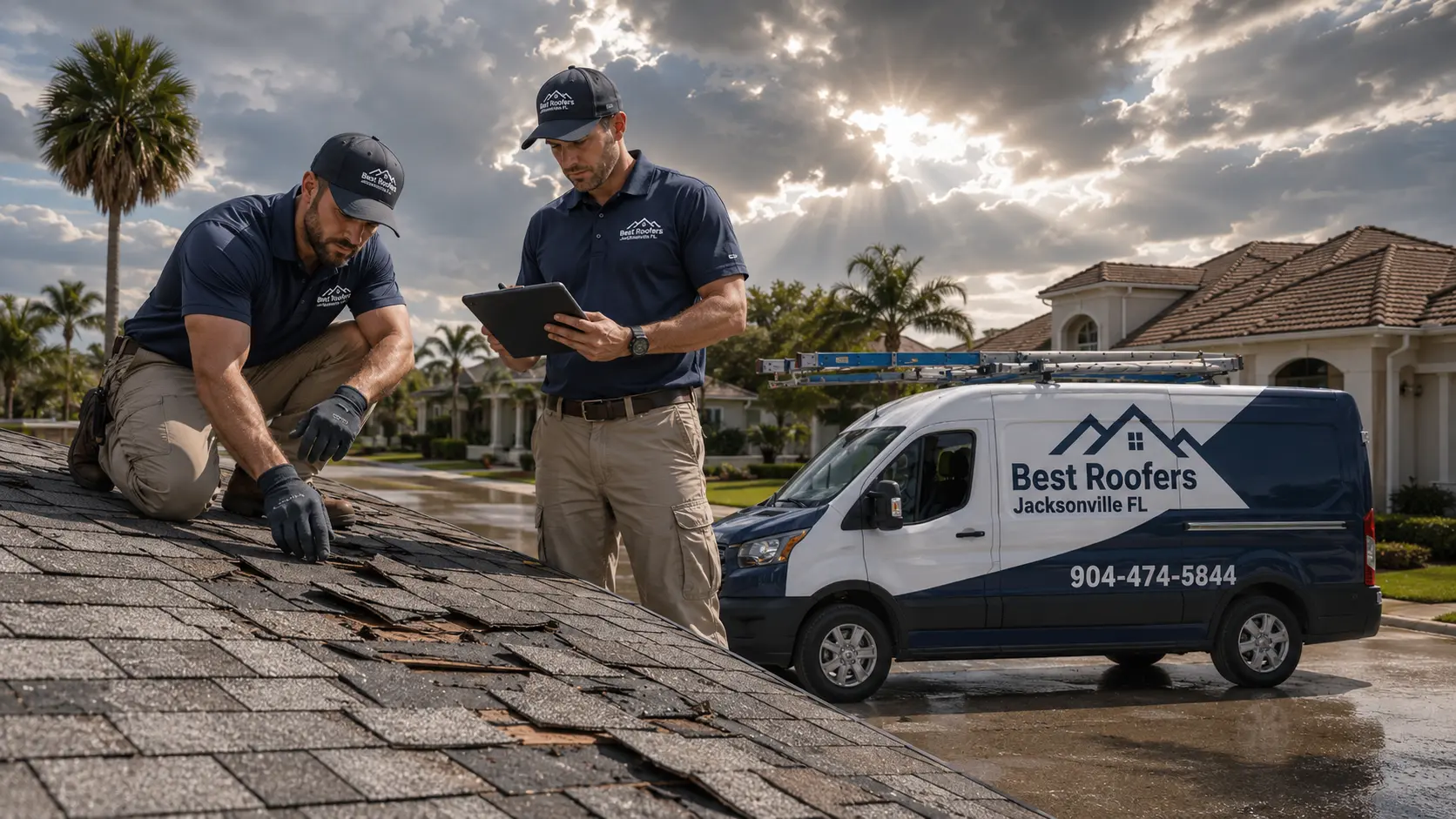
Ponte Vedra Beach runs along A1A between the Atlantic and the Intracoastal, and it presents the most demanding roofing environment in our service area. Homes here face salt-laden air, sustained coastal wind, driving rain during storm events and the full intensity of Florida sun with very little natural wind protection.
The residential architecture is also more varied and generally higher-end than inland neighborhoods, with tile, metal and premium shingle systems all present, and roof geometry that often includes complex transitions, courtyards, towers and multiple roof levels. Doing this work well requires accounting for exposure that simply is not a factor five miles inland.
Salt air and corrosion
Salt-laden air is the defining variable at the beach. It settles on every surface, and it is particularly hard on metal components — fasteners, flashing, drip edge, vents and any exposed metal detail. Corrosion at fasteners and flashing is one of the most common findings on Ponte Vedra Beach roofs that are otherwise in reasonable condition.
For metal roofing, substrate and finish selection matter enormously, as does avoiding contact between incompatible metals. Exposure decreases with distance from the ocean, so a home directly on the beach and one closer to the Intracoastal warrant different specifications. Periodic rinsing of surfaces not naturally washed by rain is commonly recommended in this environment.
Wind exposure along the coast
Oceanfront and near-oceanfront properties take wind without the buffering that inland tree cover provides. Perimeter details — eaves, rakes, ridges and hips — carry the highest stress, and the quality of edge metal, starter courses and fastening determines how a roof performs during a significant event.
Wind-driven rain compounds it. Water pushed horizontally will find any marginal detail: an under-lapped flashing, a poorly terminated ridge vent, an unsealed penetration. Many coastal leak calls involve intact roofing and a failed detail.
Tile, metal and shingle on coastal homes
Ponte Vedra Beach has a broader material mix than most of the region. Tile roofs appear on Mediterranean and Spanish-influenced homes, metal is common on both contemporary and coastal-traditional architecture, and premium architectural shingles remain widespread.
Our roofing services here cover shingle, metal and tile roofing systems along with repair work, and we will give you straightforward guidance on material considerations for coastal exposure. On existing tile roofs we handle repairs, tile relay work and full replacement, and we will be direct about which approach your roof actually needs.
Common roofing issues we find in Ponte Vedra Beach
- Corrosion at fasteners, flashing and exposed metal components
- Wind uplift damage at eaves, rakes, ridges and hips
- Wind-driven rain intrusion at penetrations and transitions
- Salt accumulation on surfaces sheltered from direct rainfall
- Sealant degradation accelerated by sun and salt exposure
- Debris impact during coastal storms
- Complex roof geometry with multiple transition points
Roofing services available in Ponte Vedra Beach
Roof Replacement
Full tear-off and replacement for roofs at the end of their service life, with decking, underlayment, flashing and ventilation addressed as one system.
Roof Replacement in Ponte Vedra Beach →Roof Repair
Leak investigation and targeted repairs for flashing failures, pipe boots, valleys, lifted shingles and localized storm damage.
Roof Repair in Ponte Vedra Beach →Shingle Roofing
Architectural asphalt shingle systems installed with the underlayment, ventilation and flashing details Florida roofs depend on.
Shingle Roofing in Ponte Vedra Beach →Metal Roofing
Standing-seam and metal panel roofing with attention to fastening, flashing, expansion and coastal exposure.
Metal Roofing in Ponte Vedra Beach →Commercial Roofing
Inspection, leak investigation, maintenance planning and repair or replacement guidance for low-slope commercial roofs.
Commercial Roofing in Ponte Vedra Beach →Storm Damage Roof Repair
Post-storm roof inspection, documentation and repair for wind damage, lifted or missing shingles, debris impact and water intrusion.
Storm Damage Roof Repair in Ponte Vedra Beach →Ponte Vedra Beach roofing questions
How does salt air affect roofs in Ponte Vedra Beach?
It accelerates corrosion on anything metal, which on a roof means fasteners, flashing, drip edge, vents and gutter systems. Salt settles on surfaces and stays there, and areas sheltered from direct rainfall — under overhangs, behind equipment, on north-facing details — accumulate the most because they never get rinsed. On metal roofing systems, substrate and finish selection become critical decisions rather than preferences, and dissimilar metals in contact will corrode faster than either would alone. Exposure decreases with distance from the ocean, so an oceanfront home and a property near the Intracoastal warrant different specifications. Periodic rinsing of the roof and its metal components is a genuinely useful maintenance habit in this environment.
What roofing materials hold up best at the beach?
There is no single answer, because it depends on the specific property, its distance from the ocean, the architecture and your priorities. Properly specified metal systems are popular in coastal settings for longevity and reflectance, but the finish and substrate must be chosen for salt exposure and the details fabricated correctly. Quality architectural shingles perform well when installed with attention to fastening, starter courses and edge details, which matter more here than inland because of wind loading. Concrete and clay tile is present throughout the area on Mediterranean-style homes, and we install and service it as well. What we will not do is claim one material is universally best — we will walk your roof, consider exposure and geometry, and give you an honest comparison of the realistic options.
Should I have my coastal roof inspected more frequently?
Yes. Coastal roofs work harder than inland roofs, so a schedule of once or twice a year plus a check after any significant storm is reasonable in Ponte Vedra Beach. What we look for here differs from an inland inspection: corrosion at fasteners and flashing, salt accumulation in sheltered areas, sealant condition at penetrations, and any sign of movement or loosening at perimeter details where wind loading concentrates. Catching a corroding flashing detail before it fails is far less expensive than repairing water damage after a storm pushes rain through it. Regular inspection also creates documentation of the roof's condition over time, which is useful when evaluating whether new damage occurred during a specific event.