
Atlantic Beach has a character of its own among the Jacksonville beaches. Closer to the ocean, the exposure profile matches what you would expect: salt, wind and sun. Move a few blocks west and the streets become shaded by mature trees, and the roofing conditions shift toward debris, moisture retention and organic growth.
The housing stock leans older than neighboring communities, with a substantial number of homes built decades ago and updated over time. That means original flashing details, older penetration treatments and ventilation configurations that predate current practice are common findings.
Coastal exposure with tree cover
The combination is unusual and it creates a double maintenance burden. Salt air still reaches homes several blocks inland and corrodes metal roof components. At the same time, tree canopy drops debris into valleys and gutters and keeps shaded slopes damp, which encourages algae and moss.
A roof dealing with both is aging on two fronts. Metal components corrode while organic growth and trapped moisture work on the shingle surface. Inspections here need to cover both categories rather than defaulting to a coastal or an inland checklist.
Older coastal homes
Many Atlantic Beach homes have been through multiple roofing cycles, and the quality of those earlier projects varies widely. We regularly find flashing that was reused rather than replaced, penetrations sealed with roofing cement instead of properly flashed, and ventilation that was never revisited even as the house was renovated.
Older homes also frequently include additions, enclosed porches and modified rooflines, each creating transitions between roof sections built at different times. Those junctions are where we look first when a leak appears near an addition.
Moisture, humidity and storm exposure
Humidity is high year-round, and shaded slopes dry slowly. Combine that with salt air, heavy summer rain and periodic coastal storms and the environment is genuinely demanding on roofing materials.
After named storms and strong nor'easters, we typically find damage concentrated at edges and ridges along with limb strikes on tree-shaded properties — the coastal and canopy hazards arriving in the same event.
Common roofing issues we find in Atlantic Beach
- Corrosion at flashing, fasteners and vent components
- Debris accumulation in valleys under tree canopy
- Algae and moss on slow-drying shaded slopes
- Original or reused flashing on older re-roofed homes
- Leaks at transitions where additions meet original rooflines
- Limb damage during coastal storms
- Outdated attic ventilation configurations
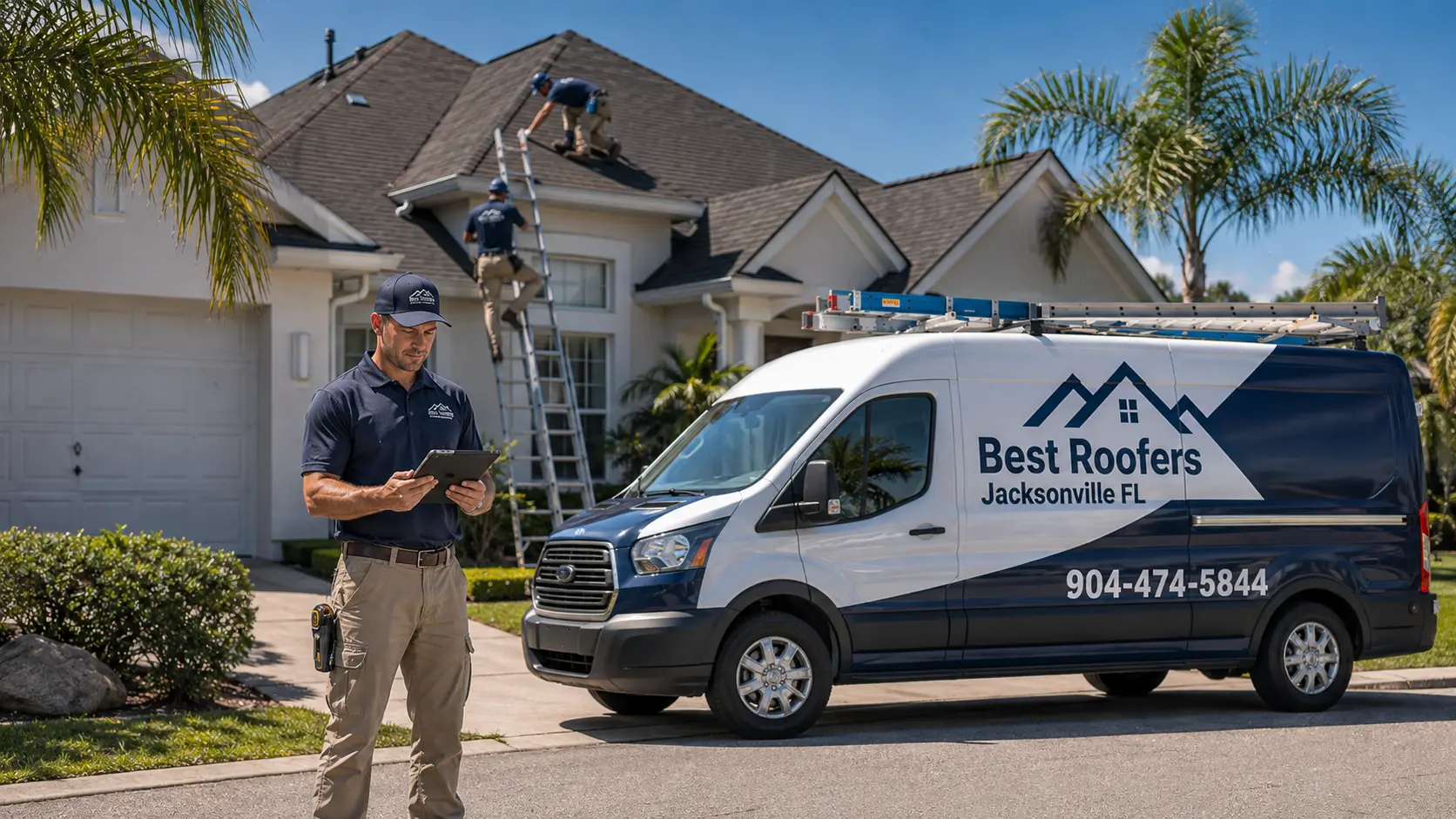
Roofing services available in Atlantic Beach
Roof Replacement
Full tear-off and replacement for roofs at the end of their service life, with decking, underlayment, flashing and ventilation addressed as one system.
Roof Replacement in Atlantic Beach →Roof Repair
Leak investigation and targeted repairs for flashing failures, pipe boots, valleys, lifted shingles and localized storm damage.
Roof Repair in Atlantic Beach →Shingle Roofing
Architectural asphalt shingle systems installed with the underlayment, ventilation and flashing details Florida roofs depend on.
Shingle Roofing in Atlantic Beach →Metal Roofing
Standing-seam and metal panel roofing with attention to fastening, flashing, expansion and coastal exposure.
Metal Roofing in Atlantic Beach →Commercial Roofing
Inspection, leak investigation, maintenance planning and repair or replacement guidance for low-slope commercial roofs.
Commercial Roofing in Atlantic Beach →Storm Damage Roof Repair
Post-storm roof inspection, documentation and repair for wind damage, lifted or missing shingles, debris impact and water intrusion.
Storm Damage Roof Repair in Atlantic Beach →Atlantic Beach roofing questions
My Atlantic Beach home has had several roofs over the years — what should I be checking?
The details that previous projects may have carried forward rather than corrected. On homes that have been re-roofed multiple times, we commonly find flashing that was reused instead of replaced, penetrations that were sealed with roofing cement rather than properly flashed, and attic ventilation that was never revisited even through renovations. Also check the transitions where additions or enclosed porches meet the original roofline, since those junctions join structures built at different times to different standards and are frequent leak sources. An inspection that includes attic access is particularly valuable on older homes, because evidence of long-term intrusion often shows on the underside of the decking before it appears on a ceiling.
Does tree cover help or hurt a coastal roof?
Both, which is what makes Atlantic Beach distinctive. Shade reduces direct ultraviolet exposure and lowers roof surface temperatures, and trees provide some wind buffering during storms. But the same canopy drops leaves and needles into valleys and gutters, keeps shaded slopes damp long after rain, and encourages algae and moss growth. Limbs also abrade shingle surfaces in wind and become damaging debris during storms. Meanwhile the salt air still reaches the roof and corrodes metal components regardless of shade. The practical takeaway is that tree-shaded coastal properties need both maintenance routines: regular debris clearing and limb trimming, plus attention to corrosion at flashing and fasteners.
How quickly can you respond after a coastal storm?
We prioritize active water intrusion first, since ongoing leaks cause the fastest damage. After a widespread event affecting Atlantic Beach, Neptune Beach and Jacksonville Beach, demand rises across all three communities at once and scheduling naturally stretches, so calling early makes a difference. Tell us when you call whether water is actively entering the home and where you are seeing it, because that determines how we sequence visits and whether temporary protective measures are appropriate before permanent repairs can be made. If your situation is a precautionary post-storm check with no interior evidence, that inspection can be scheduled without urgency and will still catch the lifted shingles and displaced flashing that cause problems later.