
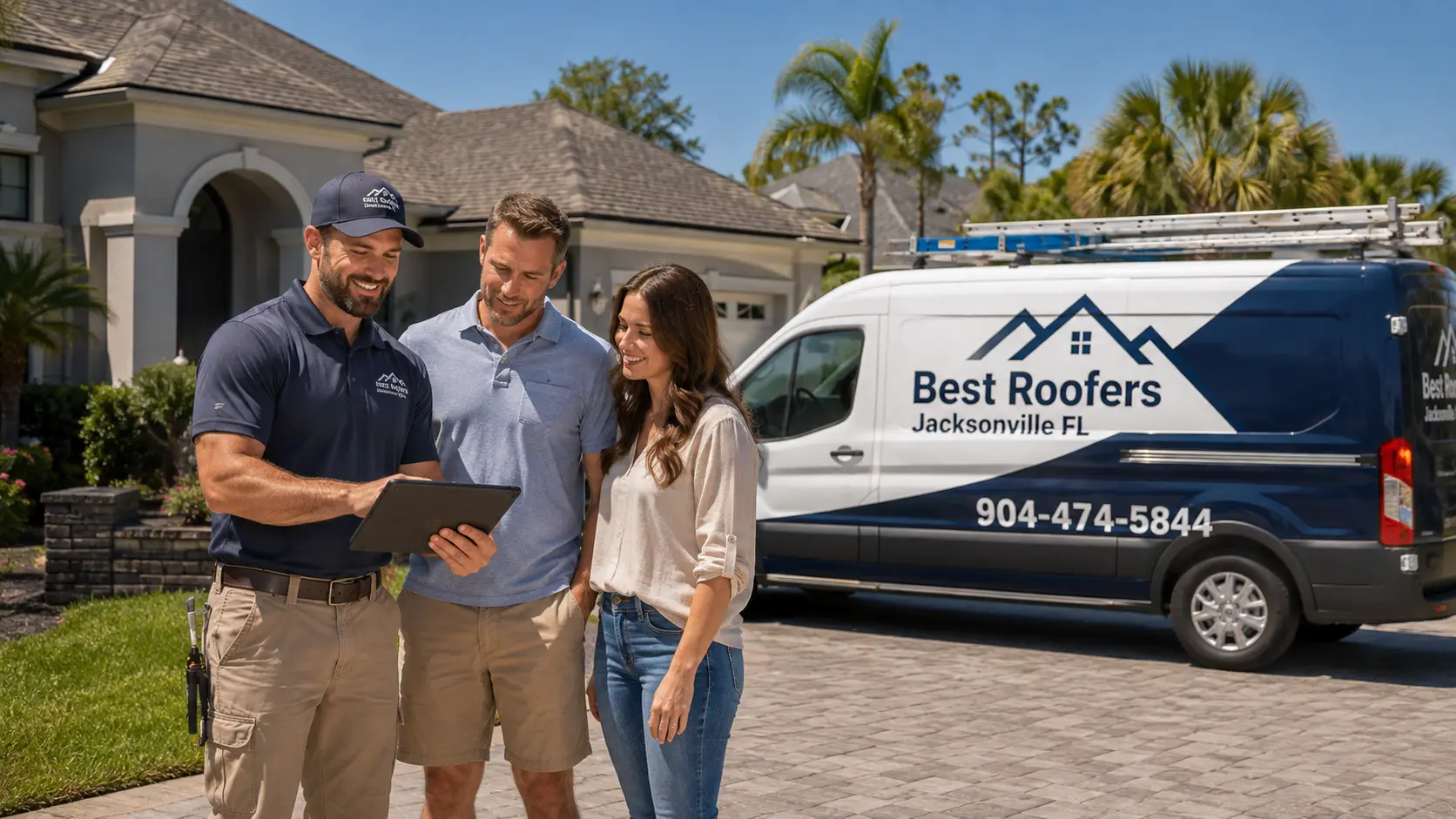
Fleming Island developed largely through planned residential communities built from the 1990s onward, concentrated along the CR 220 corridor and stretching toward Doctors Lake and the St. Johns River. The housing tends toward larger homes with substantial roof areas, hip and gable combinations, and the covered outdoor spaces common in Florida construction of that era.
Many of these roofs are now at or approaching the point where their first covering is done. That makes Fleming Island a mix of replacement projects and the kind of detail repairs typical of roofs in their second decade.
Planned communities and larger homes
Roof areas here are generally larger than in older Clay County neighborhoods, with more penetrations and more transitions. Bonus rooms, side-entry garages, covered lanais and decorative gables all add junctions that require correct flashing.
Because many homes in a given neighborhood were built in the same window by the same builders, roofs tend to age on a similar timeline. It is common for us to work on several homes in one community within the same period, simply because they reached the same point together.
Doctors Lake, humidity and water proximity
Doctors Lake and the nearby river influence local humidity, and properties with open water exposure get more direct wind during storms. Sustained humidity works on roofing systems continuously, and it makes attic ventilation and moisture management more consequential than in drier climates.
Waterfront and near-water properties also tend to have more exposed roof planes with fewer wind obstructions, which concentrates stress at ridges, hips and edges.
Storm exposure inland of the coast
Fleming Island is well inland of the Atlantic, so salt exposure is minimal. What it does receive is the full force of tropical system wind and rainfall as those systems move across the region, along with the strong convective storms that develop through the summer.
Post-storm findings here typically follow the wind pattern: lifted or creased shingles along ridges and rakes, displaced ridge caps, damaged vents and occasional limb strikes on lots with mature landscaping.
Common roofing issues we find in Fleming Island
- First-generation roofs reaching the end of service life
- Flashing at lanai, bonus-room and garage transitions
- Wind damage at ridges, hips and rake edges
- Attic humidity and ventilation imbalance
- Pipe boot and sealant degradation on 1990s and 2000s roofs
- Gutter capacity during heavy summer rainfall
- Debris on properties with established landscaping
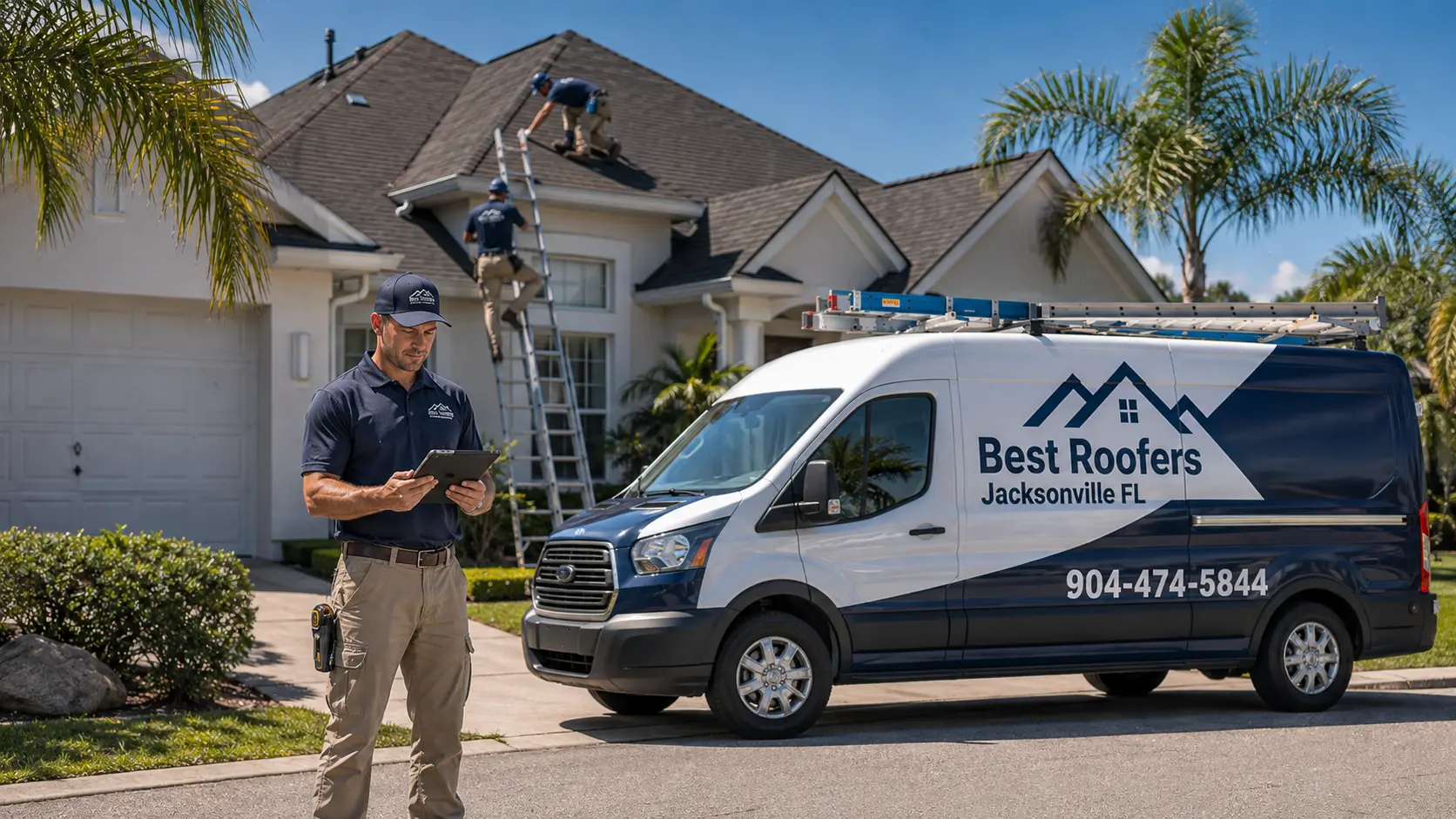
Roofing services available in Fleming Island
Roof Replacement
Full tear-off and replacement for roofs at the end of their service life, with decking, underlayment, flashing and ventilation addressed as one system.
Roof Replacement in Fleming Island →Roof Repair
Leak investigation and targeted repairs for flashing failures, pipe boots, valleys, lifted shingles and localized storm damage.
Roof Repair in Fleming Island →Shingle Roofing
Architectural asphalt shingle systems installed with the underlayment, ventilation and flashing details Florida roofs depend on.
Shingle Roofing in Fleming Island →Metal Roofing
Standing-seam and metal panel roofing with attention to fastening, flashing, expansion and coastal exposure.
Metal Roofing in Fleming Island →Commercial Roofing
Inspection, leak investigation, maintenance planning and repair or replacement guidance for low-slope commercial roofs.
Commercial Roofing in Fleming Island →Storm Damage Roof Repair
Post-storm roof inspection, documentation and repair for wind damage, lifted or missing shingles, debris impact and water intrusion.
Storm Damage Roof Repair in Fleming Island →Fleming Island roofing questions
Several homes in my Fleming Island neighborhood are getting new roofs — should I be looking at mine?
It is a reasonable prompt to have yours inspected. Planned communities are typically built in a compressed window by the same builders using the same materials, so the roofs age on a similar timeline and reach the end of their service life around the same period. If neighbors with comparable homes are replacing, yours is likely in the same range. That does not mean you automatically need a replacement — condition varies with exposure, ventilation, tree cover and how well details were maintained. What it means is that an inspection is worth doing now, so you can plan rather than react. We will assess the actual condition of your roof and tell you honestly where it stands, including if it has several years left.
Does being near Doctors Lake affect my roof?
It adds humidity and, on properties with open water exposure, more direct wind during storms. Sustained high humidity works on a roofing system continuously and makes attic ventilation and moisture management more consequential than they would be in a drier climate — a poorly ventilated attic in this environment holds moisture against the underside of the decking. Waterfront and near-water lots also tend to have fewer wind obstructions, so ridges, hips and perimeter edges take more stress during storms. Salt is not a meaningful factor at this distance from the coast, which is one advantage Fleming Island has over the beach communities. Standard inland roofing materials perform well here when the details are done correctly.
What roofing options do you offer on Fleming Island?
The full range: architectural asphalt shingle roofing, metal roofing systems, targeted roof repairs, full replacements, storm damage inspection and repair, and commercial roofing for property owners in the area. On residential replacements here, most homeowners choose architectural shingles, which suit the neighborhood aesthetic and the typical roof geometry, though metal is chosen by some for longevity and heat reflectance on large exposed roof planes. We will price the options on your actual roof rather than quoting from a general figure, and we will explain what happens underneath the surface — decking, underlayment, flashing and ventilation — since that is what determines how the roof performs.